Now Reading: Why Arizona Pools Turn Green So Fast
-
01
Why Arizona Pools Turn Green So Fast
Arizona Pool Conditions Can Be Harsh
Arizona pools deal with some of the toughest swimming pool conditions in the country. Extreme summer heat, strong UV exposure, hard water, and dust storms can all create water quality problems if pool maintenance falls behind.
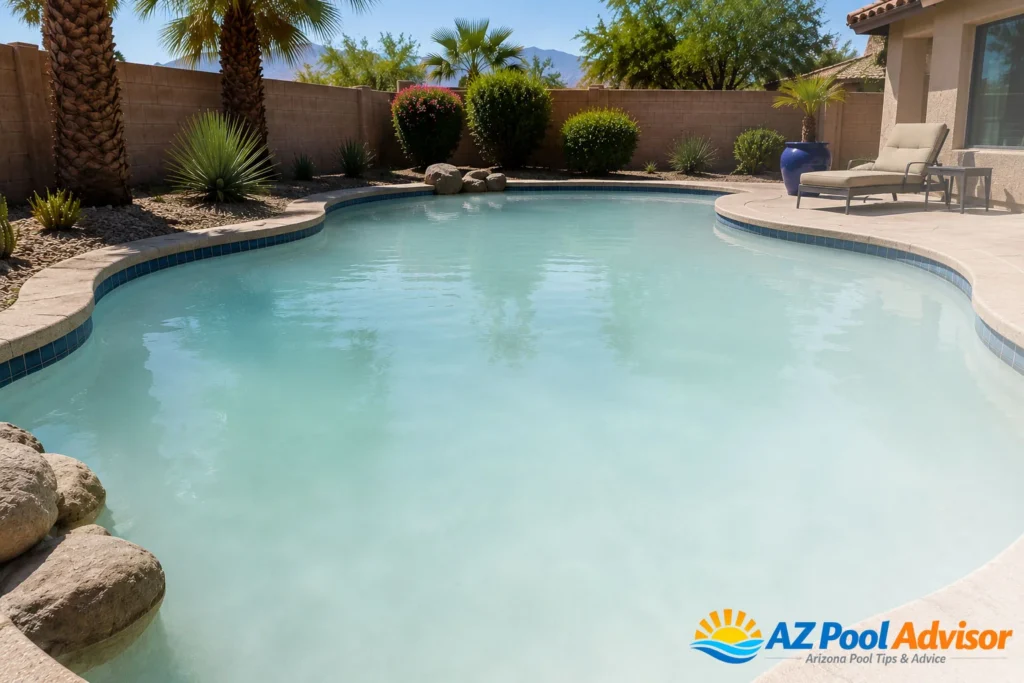
Many homeowners are surprised by how quickly clear pool water can suddenly become cloudy or green. During the hottest parts of the Arizona summer, algae can begin forming in just a few days if chlorine levels drop too low.
Understanding why this happens can help pool owners avoid expensive cleanup, chemical imbalance, and potential equipment issues.
“Arizona heat and sunlight can burn through chlorine much faster than many homeowners realize.”
What Causes Green Pool Water?
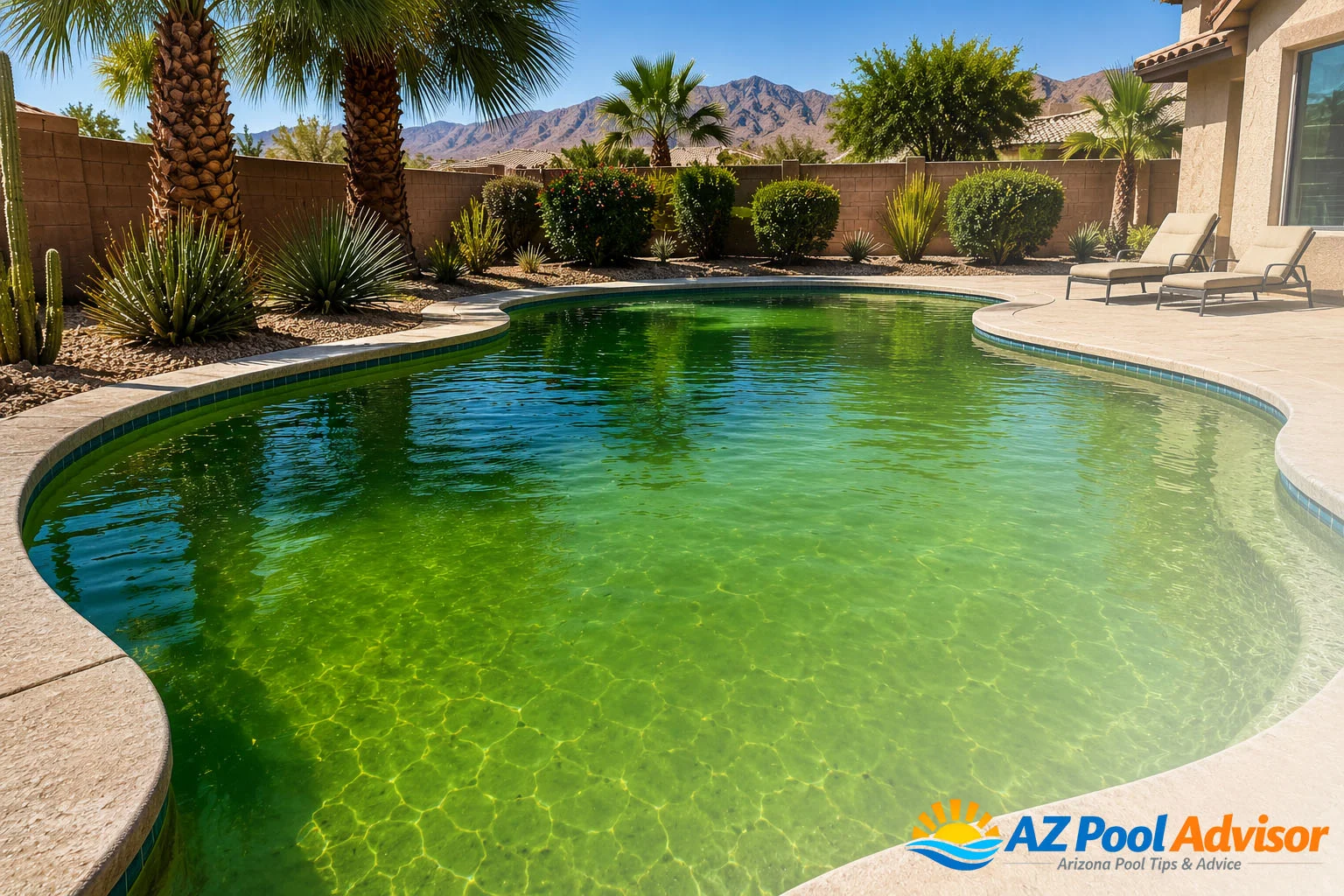
Most green pool water is caused by algae growth. Algae are tiny organisms that thrive in warm water when chlorine levels are too low.
Arizona creates the perfect environment for algae because:
- Water temperatures stay high for long periods
- Pools receive intense direct sunlight
- Chlorine breaks down faster in UV exposure
- Dust and debris regularly enter the water
Once chlorine levels fall, algae can begin attaching to pool walls, steps, and other surfaces.
Homeowners often first notice:
- Cloudy water
- Slippery pool walls
- Dull-looking water
- Green spots near steps or corners
If left untreated, the entire pool can quickly turn green.
How Arizona Heat Affects Chlorine
One of the biggest reasons Arizona pools struggle during the summer is chlorine loss. Extreme sunlight and high temperatures can rapidly reduce chlorine levels throughout the day.
Even pools that looked balanced earlier in the week may suddenly test low during extreme heat.
This becomes even more common during:
- Long heat waves
- Heavy pool use
- Monsoon season
- Poor water circulation
- Inconsistent maintenance
“Low chlorine levels are one of the fastest ways for algae to begin forming in Arizona pools.”
Poor Circulation Can Make the Problem Worse
Pool circulation plays a major role in keeping water clean and balanced. If water is not moving properly, algae and bacteria can begin forming in low-flow areas.
Common circulation problems include:
- Dirty filters
- Clogged baskets
- Failing pool pumps
- Blocked return lines
- Insufficient pump runtime
Areas with poor circulation often develop algae first, especially around steps, corners, and pool walls.
Pool owners may also notice cloudy water or debris collecting in certain sections of the pool.
Arizona Dust and Monsoon Storms
Arizona dust storms and monsoon weather can also contribute to green pool problems.
Dust, dirt, leaves, and debris introduce contaminants into the water. These materials consume chlorine and place additional stress on pool chemistry.
After major storms, many homeowners notice:
- Cloudy water
- Algae blooms
- Dirty filters
- Increased chlorine demand
This is one reason many Arizona pools require extra maintenance during the summer months.
How to Help Prevent Green Pool Water
Consistent maintenance is one of the best ways to help prevent algae growth and water problems.
Basic pool care includes:
- Testing chlorine regularly
- Brushing pool walls
- Cleaning baskets and filters
- Maintaining proper circulation
- Removing debris quickly
- Shocking the pool when needed
Pool owners should also monitor water levels and chemical balance during periods of extreme heat.
Regular brushing is especially important because algae often begin attaching to pool surfaces before the water visibly turns green.
“Brushing pool walls regularly helps prevent algae from attaching to pool surfaces.”
When a Pool May Need More Aggressive Treatment
In some situations, standard maintenance may not be enough to recover a severely green pool.
Heavy algae growth can sometimes require:
- Multiple chlorine treatments
- Deep cleaning
- Filter cleaning
- Vacuuming to waste
- Partial draining
- Full pool startup procedures
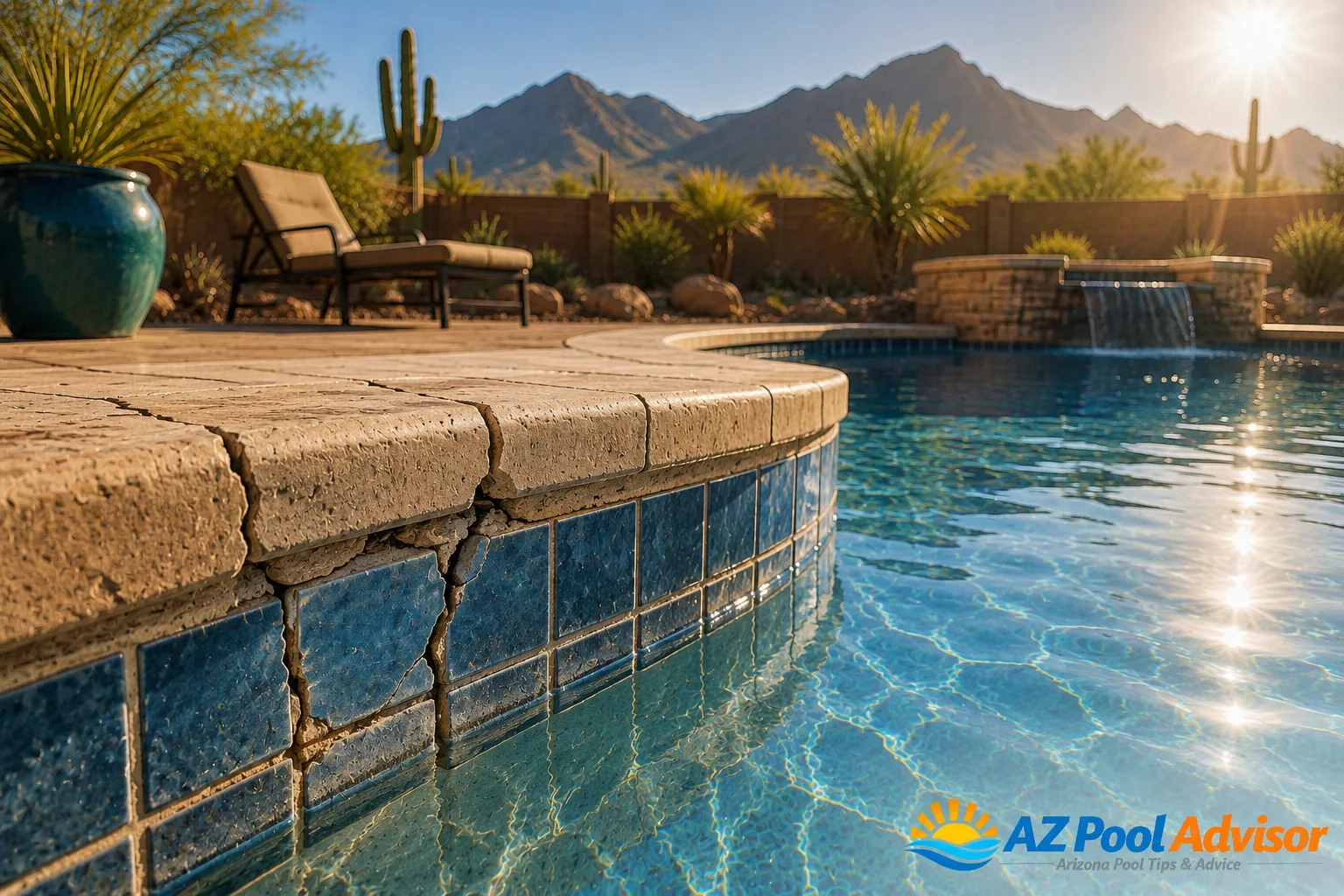
Pools with heavy staining or severe algae buildup may also need additional inspection to determine whether the issue is algae, calcium buildup, or surface staining.
Final Thoughts
Arizona pools require consistent attention during the hotter months of the year. Extreme sunlight, high temperatures, dust, and heavy chlorine demand can quickly create water quality problems if maintenance falls behind.
Understanding how algae forms and how Arizona conditions affect pool chemistry can help homeowners keep their pools cleaner, safer, and easier to maintain throughout the summer.
To learn more about healthy swimming and pool sanitation, we recommend reviewing guidance from the :contentReference[oaicite:0]{index=0}.

Brandon LaVere is a local pool owner based in Chandler, Arizona, with firsthand experience dealing with the challenges that Arizona heat, hard water, algae growth, and pool maintenance can create for homeowners. Through AZ Pool Advisor, Brandon shares practical pool care tips, real-world experiences, and Arizona-focused advice designed to help homeowners better understand and maintain their swimming pools throughout the year.