Now Reading: White Stains on Pool Walls: Calcium or Algae?
-
01
White Stains on Pool Walls: Calcium or Algae?

What Causes White Stains on Pool Walls?
White stains on swimming pool walls are a common problem in Arizona. Many homeowners notice rough white buildup forming around the waterline, steps, pool floor, or near return lines.
In most cases, these stains are caused by calcium buildup from Arizona’s hard water conditions. However, some stains may also be related to algae growth, chemical imbalance, or surface staining.
Understanding the difference can help pool owners choose the right cleaning and treatment approach.
“Arizona hard water can leave behind stubborn white calcium deposits on pool surfaces over time.”
Why Arizona Pools Develop Calcium Buildup
Arizona is known for hard water. Hard water contains high levels of dissolved minerals, especially calcium.
As pool water evaporates during hot weather, minerals remain behind and can begin collecting on pool surfaces.
Over time, homeowners may notice:
- White chalky buildup
- Rough pool walls
- Calcium rings near the waterline
- White deposits around tile or returns
Extreme Arizona heat and evaporation can make this problem worse during the summer months.
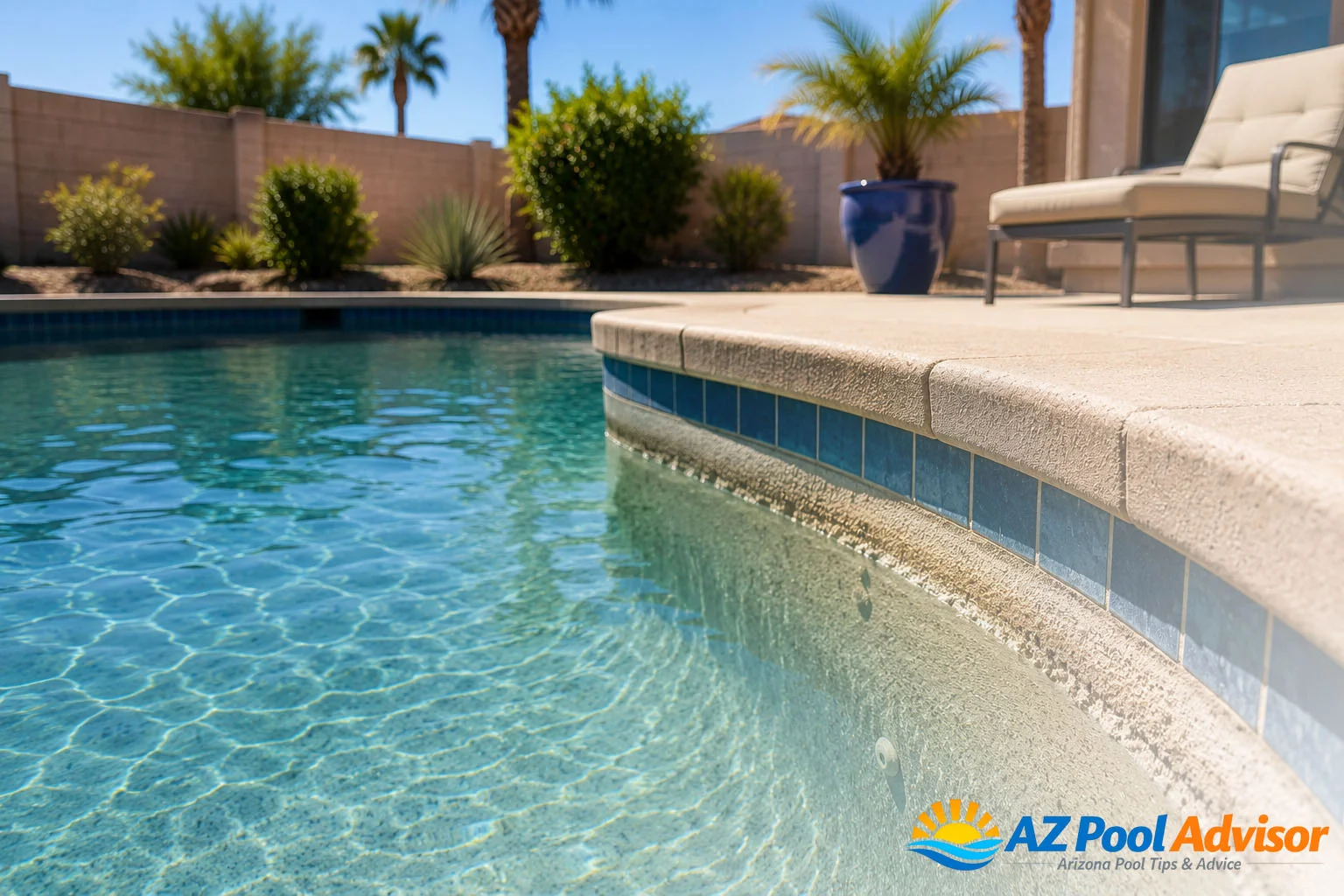
What Calcium Buildup Looks Like
Calcium buildup usually appears white, gray, or slightly tan in color. It often feels rough or crusty when touched.
Common areas where calcium forms include:
- Waterline tile
- Pool steps
- Pool walls
- Spillways and fountains
- Areas with poor circulation
In severe cases, calcium deposits can become very thick and difficult to remove without professional cleaning methods.
“Calcium buildup often feels rough or sandpaper-like on pool surfaces.”
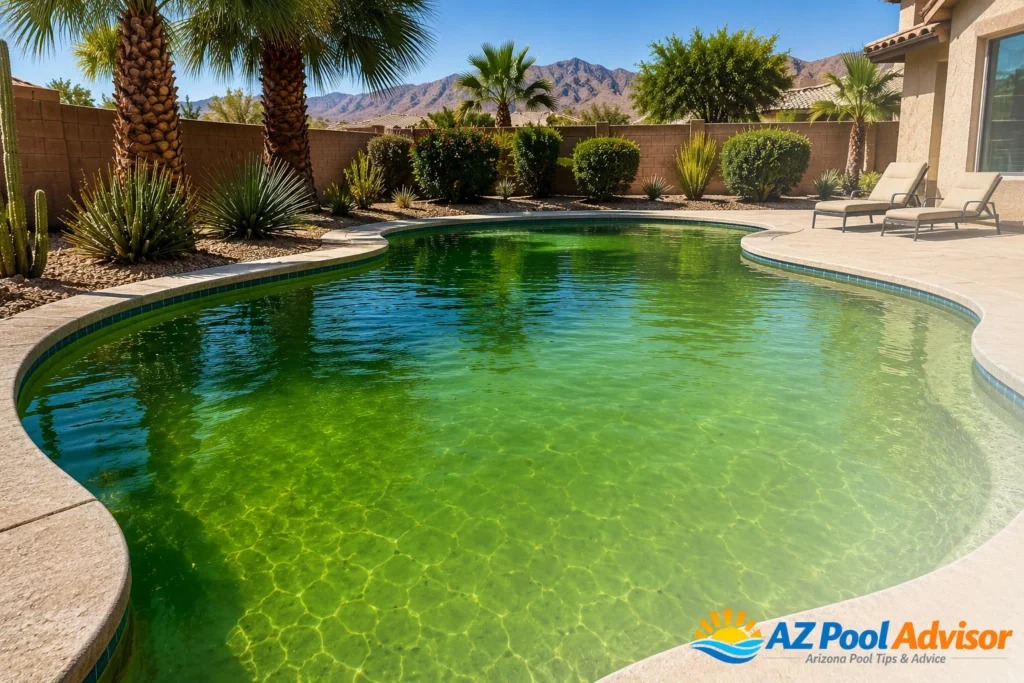
Could the White Stains Be Algae?
Some homeowners mistake algae or chemical residue for calcium buildup. While green algae is more common, certain algae problems can appear lighter in color.
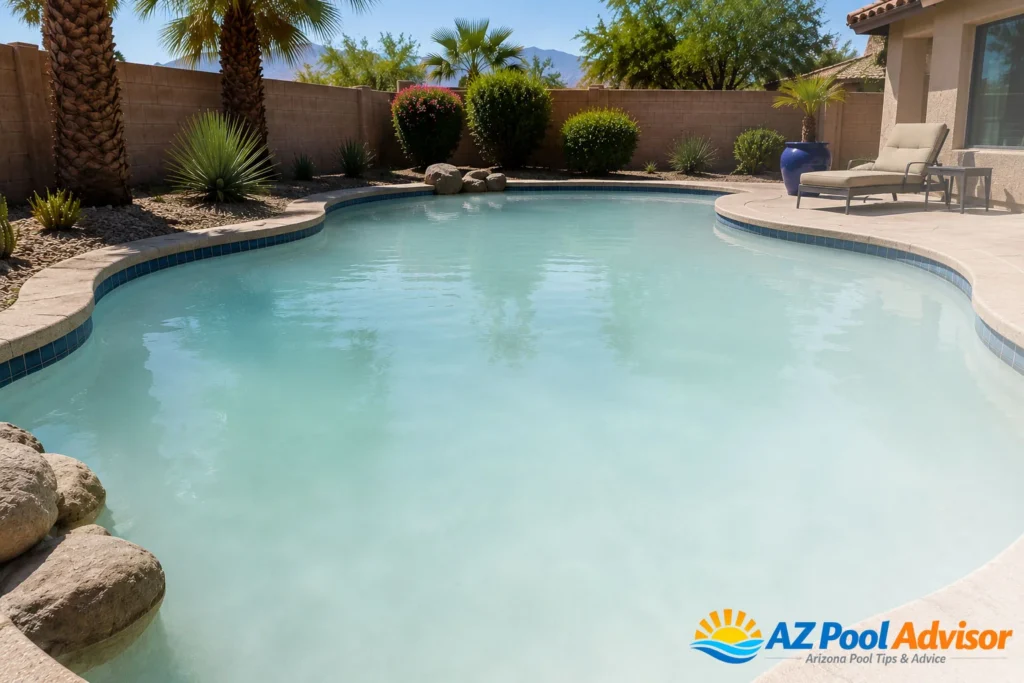
In some situations, white or cloudy-looking spots may be caused by:
- Dead algae residue
- Chemical scaling
- Surface staining
- Poor water balance
If the material brushes away easily, it may be algae or debris rather than hardened calcium deposits.
Calcium buildup usually remains attached firmly to the pool surface.
How Poor Water Balance Contributes to Staining
Pool chemistry plays a major role in calcium buildup and staining problems.
Improper levels involving:
- pH
- Calcium hardness
- Alkalinity
- Chlorine
can all increase the chances of scaling and surface deposits.
Arizona pools often require more frequent chemical monitoring because heat and evaporation constantly affect water balance.
How Homeowners Try to Remove Calcium Buildup
Removing calcium buildup can be difficult depending on how severe the deposits have become.
Some homeowners attempt:
- Pool brushing
- Pumice stones
- Calcium removers
- Tile cleaning tools
- Professional bead blasting
However, aggressive cleaning methods can sometimes damage pool surfaces if used incorrectly.
Testing small areas first and following manufacturer recommendations is always important.
“Some calcium deposits become extremely difficult to remove once buildup becomes severe.”
How to Help Prevent White Pool Stains
Consistent pool maintenance can help reduce the chances of calcium buildup and staining problems.
Helpful maintenance steps include:
- Testing water chemistry regularly
- Monitoring calcium hardness levels
- Brushing pool walls weekly
- Cleaning tile buildup early
- Maintaining proper circulation
- Keeping water balanced during summer
Early treatment is often much easier than trying to remove years of hardened calcium deposits later.
When a Pool May Need Draining
In severe situations, pools with excessive calcium levels or difficult water chemistry may eventually require partial or full draining.
Arizona pools sometimes become chemically difficult to balance after long periods of evaporation and mineral buildup.
Draining and refilling may help reduce:
- High calcium hardness
- Total dissolved solids (TDS)
- Long-term scaling issues
- Chemical imbalance problems
However, draining a pool should always be approached carefully during extreme Arizona heat.
Final Thoughts
White stains on pool walls are extremely common in Arizona due to hard water, heat, and evaporation. In many cases, calcium buildup is the main cause, although algae and chemical imbalance can sometimes contribute to surface problems as well.
Regular maintenance, water testing, and early cleaning can help homeowners prevent severe buildup and keep pool surfaces looking cleaner throughout the year.
To learn more about pool water chemistry and healthy swimming practices, we recommend reviewing guidance from the :contentReference[oaicite:0]{index=0}.

Brandon LaVere is a local pool owner based in Chandler, Arizona, with firsthand experience dealing with the challenges that Arizona heat, hard water, algae growth, and pool maintenance can create for homeowners. Through AZ Pool Advisor, Brandon shares practical pool care tips, real-world experiences, and Arizona-focused advice designed to help homeowners better understand and maintain their swimming pools throughout the year.