Now Reading: Pool Startup Guide After Draining Your Pool
-
01
Pool Startup Guide After Draining Your Pool
Why Pool Startup Matters After Draining
Draining and refilling a swimming pool is a major process, especially in Arizona. Once fresh water is added back into the pool, the startup process becomes extremely important for water quality, surface protection, and equipment performance.
Many homeowners focus heavily on draining the pool but do not realize that proper startup procedures are just as important as the refill itself.
If chemicals are added incorrectly or circulation is delayed too long, new problems can quickly develop.
“A proper pool startup helps protect both the water and the pool surface after a refill.”
Why Arizona Pools Sometimes Need Draining
Arizona pools often deal with hard water, calcium buildup, algae problems, and chemical imbalance over time. In some situations, partial or full draining may become necessary.
Common reasons homeowners drain pools include:
- Heavy algae growth
- High calcium levels
- Staining on pool surfaces
- Poor water chemistry
- Excessive total dissolved solids (TDS)
- Long-term neglected maintenance
Because Arizona experiences extreme heat and evaporation, pools can become chemically difficult to balance after long periods without proper maintenance.
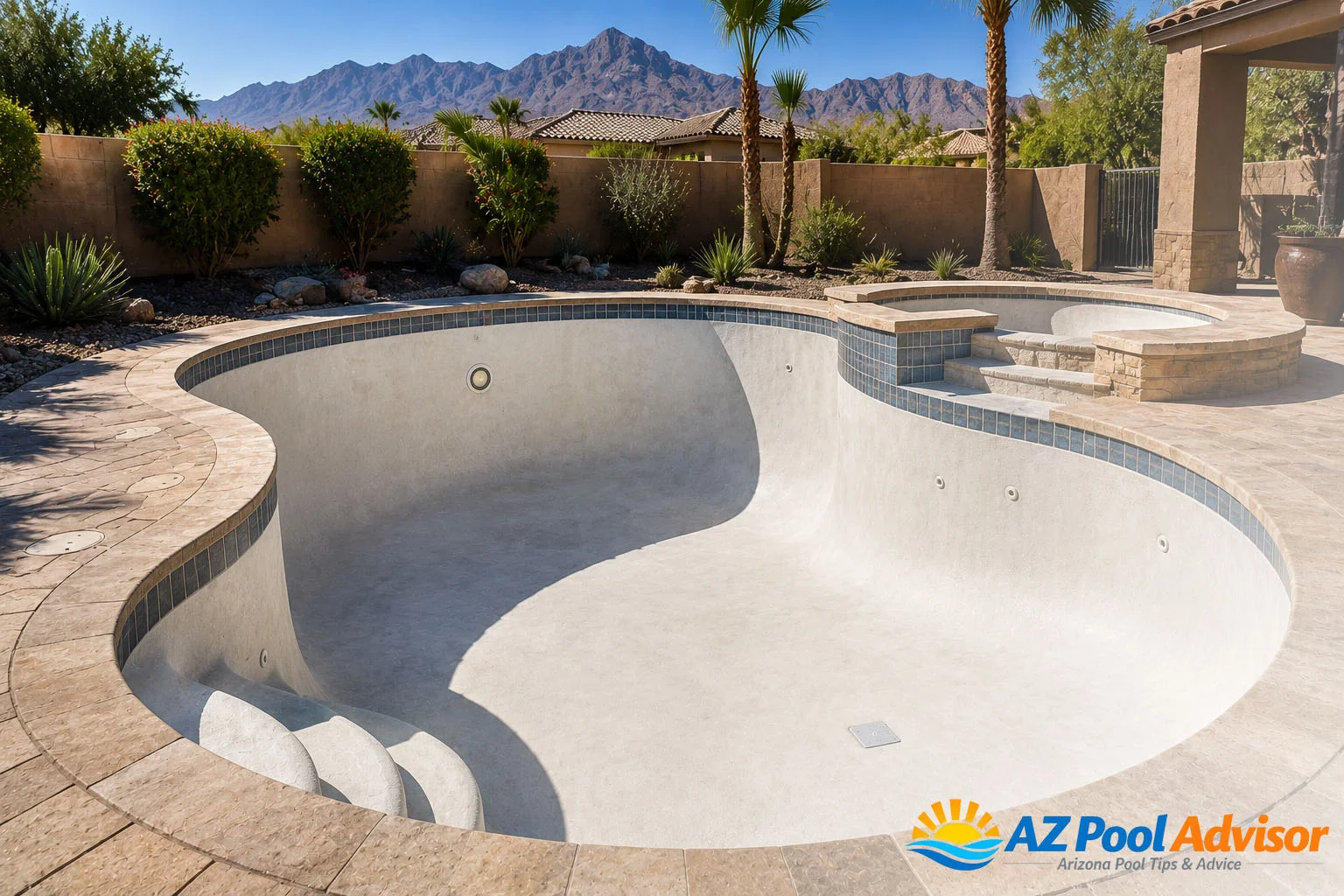
Cleaning the Pool Before Refilling
Before refilling the pool, many homeowners choose to clean the walls, steps, and surfaces while the pool is empty.
This may include:
- Brushing algae buildup
- Removing debris
- Cleaning calcium stains
- Treating problem areas
- Inspecting visible cracks or damage
Cleaning during the drain process can help improve overall water quality once the pool is refilled.
However, pool surfaces should not remain empty for extended periods during extreme Arizona heat because some surfaces can become damaged if left exposed too long.
“Arizona sunlight and heat can be extremely harsh on empty pool surfaces during the summer.”
Refilling the Pool
Once cleaning is complete, the refill process can begin. Most homeowners use a standard garden hose, although refill times can vary depending on pool size and water pressure.
During the refill, it is important to monitor:
- Water level progress
- Pool surface condition
- Equipment readiness
- Leaks or unusual water loss
Some homeowners also place the hose in the deeper end of the pool to help reduce surface streaking or uneven water exposure during filling.
Starting Pool Equipment
Once the water level reaches the proper operating level, the pool equipment should be restarted.
This typically includes:
- Pool pump
- Filter system
- Skimmers
- Return lines
- Cleaning systems
Proper circulation is important because chemicals need to move evenly throughout the water.
If circulation problems exist after startup, homeowners may notice:
- Cloudy water
- Weak return pressure
- Dirty water buildup
- Uneven chemical readings
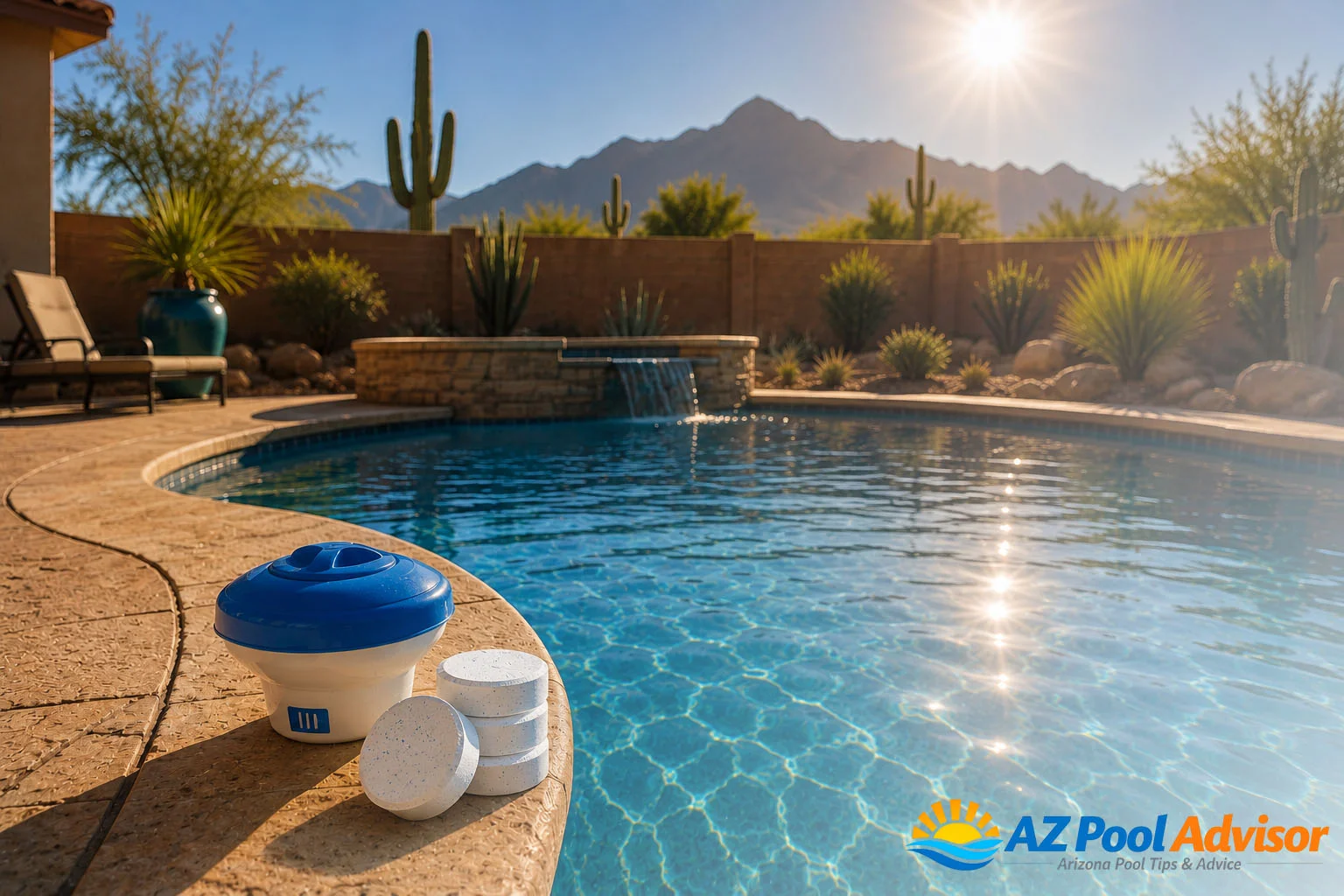
Adding Chemicals After Refilling
Fresh fill water still requires chemical balancing. Arizona water can contain minerals and hard water elements that affect pool chemistry almost immediately.
After startup, homeowners commonly test and adjust:
- Chlorine
- pH levels
- Alkalinity
- Calcium hardness
- Cyanuric acid (stabilizer)
Many pool owners also shock the pool shortly after refill to help sanitize the water and prevent algae growth.
“Proper water balance is one of the most important steps after refilling a pool.”
Watching for Early Water Problems
During the first several days after startup, pool owners should closely monitor water clarity and chemical readings.
Common early warning signs include:
- Cloudy water
- Low chlorine levels
- Strong chemical odors
- Visible algae spots
- Staining on pool walls
Arizona heat can quickly affect chlorine levels, especially during summer months. Testing the water regularly during the first week can help prevent new problems from developing.
Regular Maintenance After Startup
Once the pool has stabilized, regular maintenance becomes important again.
This includes:
- Brushing walls weekly
- Cleaning filters
- Removing debris
- Testing water chemistry
- Monitoring circulation
Consistent maintenance can help extend the life of pool equipment and reduce the chances of algae or water quality problems returning.
Final Thoughts
A pool startup after draining is more than simply refilling the water. Proper cleaning, circulation, chemical balancing, and monitoring all play important roles in helping the pool recover successfully.
Arizona pool conditions can be demanding, especially during periods of extreme heat. Staying proactive during the startup process can help homeowners avoid additional maintenance problems later.
To learn more about healthy swimming and water safety, we recommend reviewing guidance from the :contentReference[oaicite:0]{index=0}.

Brandon LaVere is a local pool owner based in Chandler, Arizona, with firsthand experience dealing with the challenges that Arizona heat, hard water, algae growth, and pool maintenance can create for homeowners. Through AZ Pool Advisor, Brandon shares practical pool care tips, real-world experiences, and Arizona-focused advice designed to help homeowners better understand and maintain their swimming pools throughout the year.